Cash Out Refinance Investment Property Loans Guide

Is cash-out refinancing on an investment property available in 2026?  Yes, but the terms are tighter than for a primary residence. Most investment-property lenders offering cash out refinance programs, cap loan-to-value at 70%–75%, meaning you need 25%–30% equity remaining after closing. Expect a credit score minimum of 680–720, six months of PITI reserves per financed… Read More »


Apartment Building Loans

Getting an apartment building loan starts with matching the property to the right program. Buildings of five or more units fall outside residential lending entirely, so approval turns on the property’s net operating income, not your personal income. Lenders test debt service coverage, loan-to-value, market strength, and your track record as an operator. HUD, Fannie… Read More »

How Soon Can I Do a HELOC After Purchasing a Home?

In most cases, you can apply for a HELOC as soon as 30–90 days after purchasing your home, but the more important factor is not time, it is equity. There is no federal mandatory waiting period for a HELOC after purchase, seasoning rules are set by each lender’s internal credit policy, not by government regulation, which… Read More »

How Much Equity Do You Need for a HELOC?

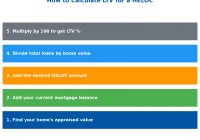
To qualify for a HELOC, most lenders require you to retain at least 15–20% equity in your home after borrowing, which means your combined loan-to-value ratio (CLTV) must stay at or below 80–85%. Here is the formula every home equity lender uses is: Maximum HELOC = (Home Value × Maximum CLTV%) − Current Mortgage Balance.… Read More »

Top Ranked Home Equity Loan Rates by State

Homeowners have been scrambling to leverage their property’s equity have a variety of financing options across the United States. The RefiGuide ranks US states for the best home equity loan rates and HELOCs in 2026. Home equity loans and HELOCs offer new opportunities for these borrowers to access funds for purposes such as home remodeling,… Read More »

Can You Do a Balance Transfer on a HELOC?

Not in the credit card sense. HELOCs have no balance transfer function, no transfer form, no promotional 0% APR window. What you can do is draw from your line and pay the card balances off directly, achieving the same result. The trade-offs differ: no 3%–5% transfer fee and no teaser rate expiring in 12–21 months,… Read More »

How to Pay Off Your Home Loan Quicker

To pay off your home loan sooner in 2026, homeowners typically combine several proven strategies for maximum acceleration. First, make biweekly payments instead of monthly, splitting your monthly payment in half every two weeks produces one extra full payment annually, cutting 4-8 years from your loan. Second, apply principal-only extra payments whenever possible, even $200-$500… Read More »

Can You Use a HELOC to Buy a House?

Yes, you can use a HELOC to buy a house, and it is one of the most strategically powerful equity deployment tools available to homeowners in 2026. Taking out a home equity line of credit on your primary residence that is secured against your existing equity can facilitate the cash requirement for a down payment,… Read More »

Can I Rent My Home If I Have a Mortgage?

Yes, you can rent out your home even with an active mortgage, but whether you’re legally allowed to do so depends entirely on your specific loan type, lender approval, and lease terms in your mortgage contract. Most conventional mortgages permit rental conversions with proper notification, while government-backed loans (FHA, VA, USDA) have strict owner-occupancy requirements… Read More »

Zero Down Mortgage Loan Guide

The dream of homeownership often feels out of reach for many Americans, primarily due to one significant barrier: the down payment. However, zero down home loans offer a pathway to homeownership without the need for substantial upfront savings. In 2026, these no down-payment loan programs are experiencing renewed interest as housing affordability challenges persist and… Read More »