


DSCR loans evaluate a property’s ability to generate enough rental income to cover its debt obligations, calculated as Net Operating Income (NOI) divided by annual debt service (principal, interest, taxes, insurance, HOA). Unlike conventional loans, DSCR loans don’t require personal income verification, making them accessible for investors with complex financials. In 2026, with rental demand strong and competitive interest rates, and flexible requirements, DSCR loans are popular for scaling real estate portfolios. The RefiGuide published this article to help consumers shop and compare the most trusted DSCR loan lenders online.
How to Find the Best DSCR Lenders

These private money and Non QM lenders offer low DSCR loan rates, high LTVs (up to 80%), minimal DSCR requirements (0.75–1.0), and fast closings (7–14 days).
These DSCR loan companies cater to first-time and seasoned investors, with flexible credit requirements (580–660+) and no personal debt-to-income (DTI) checks.
Banks and mortgage lenders were selected based on DSCR loan rate competitiveness, terms, customer reviews, and availability in 2026.
Key DSCR Loan Highlights
DSCR Loans Overview: Debt Service Coverage Ratio (DSCR) loans are non-qualified mortgages designed for real estate investors, qualifying on a property’s rental income rather than personal income.
Rates and Terms: DSCR rates run 6.25% to 8.25% APR as of September 2026, with aggressive terms including low or no minimum DSCR, high loan-to-value ratios, and interest-only options.
Considerations: Higher rates than conventional loans, prepayment penalties on most programs, and foreclosure risk require careful planning. Compare multiple DSCR lenders before committing.
Top 12 DSCR Lenders in 2026
Ranked by rates, terms, and investor suitability using September 2026 data. Rate assumptions: 30-year fixed or ARM, 700+ credit score, 75–80% LTV, DSCR ≥1.0.
Market context: DSCR rates run roughly 6.25% to 8.25%, with well-qualified borrowers — 740+ FICO, 1.25 DSCR, 75% LTV — pricing in the low-to-mid 6s. DSCR pricing tracks the 2-Year Treasury, not the 10-year benchmark governing conventional mortgages, which is why the two move independently. The Federal Reserve raised its benchmark a quarter point on September 16, 2026 — its first increase in three years — pushing the 2-Year Treasury to about 4.39%, its highest level since January 2025.
| Lender · NMLS # Min. Credit · Min. DSCR |
Rate Range | Max LTV · Size · Close | Key Niche |
|---|---|---|---|
| #1 Griffin FundingNMLS #1120111 · 620 min · No min. DSCR | From 6.375%1-yr ARM from 5.375% | 85% LTV $100K–$4.5M 6-day close |
No minimum DSCR — no-ratio programs qualify without cash flow · DSCR HELOC + bank statement combo · STR/Airbnb accepted · 15% down |
| #2 New SilverNMLS #1843223 · 650 min · No min. DSCR | 6.50%–7.90% | 80% LTV $100K–$3M 5-day close |
No minimum DSCR · interest-only option · fix-and-flip plus rental · fintech underwriting speed |
| #3 Defy MortgageNMLS #2346683 · 640 min · DSCR ≥0.75 | 6.25%–7.875%Publishes full FICO × LTV matrix | 85% purchase / 80% cash-out $75K min 7-day close |
Transparent published pricing rather than “starting at” teasers · DSCR as low as 0.75 · first-time investors welcome |
| #4 KiaviNMLS #1125207 · 660 min · DSCR ≥0.80 | From 5.875% | 80% LTV $75K–$3M 7-day close |
Fix-and-flip plus rental specialist · no prepayment penalty after year three · 30-year fixed plus 5/1 and 7/1 ARM · all 50 states |
| #5 Truss Financial GroupNMLS #2006915 · 620 min · DSCR ≥0.75 | 6.75%–8.25% | 80% LTV $150K–$3M 7-day close |
DSCR HELOC program · STR/Airbnb · value-add properties · wholesale and retail channels |
| #6 Visio LendingNMLS #1747752 · 680 min · DSCR ≥1.0, no exceptions | 6.75%–9.50%720+ for best pricing | 80% LTV $75K–$2M 30-day close |
Single-family rental specialist · 30-year fixed terms · portfolio loans · no seasoning requirement |
| #7 Angel Oak Mortgage SolutionsNMLS #1160240 · 620 min · DSCR ≥1.0 | 6.875%–8.50% | 80% LTV $150K–$3M 10-day close |
DSCR plus Non-QM combo · jumbo DSCR · foreign national DSCR · wholesale only — apply through a broker |
| #8 American Heritage LendingNMLS #2083604 · 620 min · DSCR ≥0.75 | 6.875%–8.50% | 80% LTV $75K–$2M 10-day close |
Condo and multifamily focus · DSCR ≥0.75 accepted · 40 states |
| #9 Park Place FinanceNMLS #1761473 · 620 min · DSCR ≥1.0 | 7.00%–8.50% | 75% LTV $100K–$2.5M 10-day close |
No junk fees · transparent pricing · experienced fix-and-flip and rental investors · 45 states |
| #10 Mortgage VintageNMLS #241911 · 620 min · DSCR ≥1.0 | 7.00%–8.50% | 75% LTV $100K–$2M 14-day close |
California-based specialist · strong for Southern California investors · purchase and cash-out refinance |
| #11 Quontic BankNMLS #403503 · 660 min · DSCR ≥1.0 | 7.00%–8.50% | 75% LTV $150K–$3M 21-day close |
FDIC-insured bank offering DSCR · portfolio lender · all 50 states |
| #12 North American Savings BankNMLS #400039 · 660 min · DSCR ≥1.0 | 7.00%–8.50% | 75% LTV $100K–$2M 21-day close |
30-year fixed DSCR terms · consistent underwriting · bank-level stability · nationwide |
DSCR = Gross Monthly Rent ÷ Monthly PITIA (principal, interest, taxes, insurance, and HOA). Lenders do not subtract vacancy, maintenance, or management costs. Rate ranges assume a 30-year fixed or ARM at 700+ FICO, 75%–80% LTV, and DSCR ≥1.0 as of September 2026. Cash-out refinances price 0.125% to 0.50% above purchase loans and carry tighter LTV caps. Pricing varies by credit score, LTV, DSCR ratio, property type, loan size, reserves, and prepayment penalty term. DSCR loans are Non-QM and not government-backed. Verify NMLS numbers at nmlsconsumeraccess.org. Compare APR across at least three lenders. Updated September 29, 2026.
How to Choose a DSCR Lender
Compare rates and terms. Look for competitive APRs and high LTVs up to 85%. Griffin Funding and New Silver offer no-ratio programs; Defy publishes a full FICO-by-LTV matrix rather than teaser pricing.
Check eligibility. Confirm your property’s DSCR and your credit align with the lender’s floor — most require 620 to 660, though Visio sets 680 with no ratio exceptions.
Evaluate speed. Griffin closes in as few as 6 days and New Silver in 5 — decisive in competitive markets. Visio runs 30 days.
Ask about prepayment penalties first. Most DSCR loans carry them on a step-down schedule over three to five years. Kiavi removes theirs after year three, and Park Place eliminates junk fees. On a $300,000 loan, a year-two exit under a 5-4-3-2-1 structure costs $12,000.
Verify property types. Confirm the lender supports your property — condos, multifamily, short-term rentals. American Heritage focuses on condo and multifamily; Visio excludes rural.
DSCR Loan Pros and Cons
Debt Service Coverage Ratio (DSCR) loans, popular among real estate investors in 2026 offer unique advantages and challenges for financing rental properties.
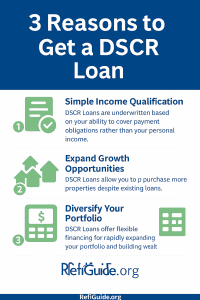
Pros: DSCR loans qualify based on a property’s rental income, not personal income, making them accessible for investors with complex financials or low W-2 income.
There are DSCR lenders like New Silver allow DSCRs as low as 0.75, with high loan-to-value ratios (up to 80%) and loan amounts from $75,000 to $5 million, enabling portfolio expansion.
Check out the Interest-Only options and fast closings (7–14 days) from Kiavi or Griffin Funding suit time-sensitive deals.
DSCR loan rates (6.375%–8.000% APR) are competitive for non-QM loans, and no personal debt-to-income (DTI) verification broadens eligibility (580+ credit).
Cons: Higher rates than conventional loans (6.31% APR) increase borrowing costs, and low DSCRs may require 20–25% down payments or reserves (6–18 months). Tenant vacancies or market downturns can strain cash flow, risking default and foreclosure, as properties are collateral. Limited lender availability—focused in states like California or Texas—can restrict options. Prepayment penalties and origination fees (1–3%) may apply, impacting profitability. For example, a $300,000 property with $24,000 NOI and a $20,000 loan payment (DSCR 1.2) is viable, but a vacancy could drop the DSCR below 1.0, complicating repayment. Investors should compare terms from DSCR loan lenders like Defy Mortgage, ensure strong property cash flow, and consult financial advisors to mitigate risks (OfferMarket).
As mentioned, DSCR loans carry higher rates than conventional mortgages (6.31% APR) due to investment property risks. A DSCR below 1.0 may require larger down payments (20–25%) or reserves (6–18 months). Tenant vacancies or market downturns can impact cash flow, risking default and foreclosure. Ensure your property’s NOI supports a DSCR of 1.25+ for better terms. Consult a financial advisor to align loans with your investment strategy.
20 Things DSCR Lenders Can Help You Accomplish in 2026

In 2026, DSCR (Debt-Service Coverage Ratio) loans continue to be a powerful financing option for real estate investors and property owners.
Unlike traditional loans, DSCR loans are approved based on the income generated by the property rather than the borrower’s personal income.
This unique approach opens a wide array of opportunities. Here are 20 things the best DSCR lenders can help you accomplish in 2026:
- Purchase Investment Properties Without Tax Returns
The best DSCR lenders will evaluate the property’s income rather than your W-2s or tax documentation, making it ideal for self-employed investors or those with complex financial profiles. - Qualify Based on Rental Income
If your rental property generates enough monthly income to cover the new loan payments, you could qualify, even with limited personal income. - Buy Multiple Properties at Once
Unlike conventional loans with strict limits, DSCR loans often allow you to finance multiple properties simultaneously. - Expand Real Estate Portfolios Quickly
By focusing on the income of the property rather than the borrower, DSCR loans make it easier to scale your real estate investments faster. - Cash Out Equity for Reinvestment
DSCR lenders can help you tap into home equity through cash-out refinance options to fund new property purchases. - Renovate and Flip Properties
With sufficient rental income and equity, DSCR HELOCs and loans can be used to renovate properties for resale or increased rental value. - Finance Short-Term Rentals (Airbnb/VRBO)
Many DSCR lenders now recognize short-term rental income, offering funding options for Airbnb and vacation rental investments. - Refinance Existing Investment Mortgages
Investors can restructure debt for better rates or longer terms without the need to qualify using personal financials. - Secure Long-Term Fixed Rates
The best DSCR lenders offer fixed-rate options for purchase, refinance or HELOC that allow investors to lock in consistent payments over 15 to 30 years. - Work Around High Debt-to-Income Ratios
Since DSCR loans don’t rely on personal DTI ratios, they are ideal for borrowers who wouldn’t qualify under traditional standards. - Access Financing with Lower Credit Scores
Some DSCR mortgage lenders work with borrowers with credit scores in the low 600s, provided the property is cash-flowing. - Avoid Employment Verification
Employment status and income aren’t primary qualifiers for DSCR loans, which simplifies and speeds up the application process. - Simplify the Documentation Process
No tax returns, W-2s, or pay stubs are required; only rental income documentation like leases and rent rolls. - Invest in Out-of-State Properties
DSCR lenders often support out-of-state investments, giving you geographic flexibility. - Acquire Mixed-Use Properties
Some lending companies allow funding for properties with both residential and commercial use, expanding investment opportunities. - Improve Property Cash Flow
Strategic DSCR funding enables investors to make improvements that can lead to higher rents and increased property value. - Partner with LLCs or Corporations
Some of the best DSCR lenders allow you to borrow in the name of a business entity, offering liability protection and organizational advantages. - Defer Taxes Through 1031 Exchanges
DSCR loans can be used in conjunction with 1031 exchanges, enabling tax-deferred growth. - Buy Properties with Low Down Payments
Some lenders allow for down payments as low as 15-20%, making property acquisition more accessible. - Build Wealth Without Traditional Barriers
DSCR lending opens the doors for investors who may not fit the mold of traditional financing but want to grow wealth through real estate.
Case Study 1: Homebuyers Using a DSCR Loan
Case Study 2: Homeowner Cashing Out to Buy Another Investment Property
Sandra owned a rental home in Phoenix that had appreciated significantly. She contacted a DSCR lender to do a cash-out refinance based on the property’s strong income history. With $150,000 in equity, she purchased a second rental property in Tucson without touching her savings. Both properties now generate income, and Sandra has increased her net worth by leveraging a strategic DSCR loan.
Case Study 3: Renovating with a DSCR HELOC and Profiting from a Sale
David, an experienced investor, took out a DSCR-based HELOC on a triplex in Miami. He used the line of credit to renovate the units, adding modern kitchens and energy-efficient upgrades. Once renovations were complete, he increased rents by 30%. After 18 months, David sold the property at a $175,000 profit. None of this required personal income verification—just the property’s income metrics.
How to Shop DSCR Loan Rates in 2026
Understand what lenders actually measure. Most DSCR lenders divide gross monthly rent by monthly PITIA — principal, interest, taxes, insurance, and HOA. They do not subtract vacancy, maintenance, or management fees. Those affect your returns; they don’t affect the ratio. Most lenders want 1.0 or higher, with best pricing above 1.25. Several accept 0.75 or below, and Griffin Funding and New Silver now offer no-ratio programs that skip the calculation entirely. Current rates run roughly 6.25% to 8.25%, driven by DSCR, credit score, LTV, and property type.
Run your own numbers first. On a $300,000 property renting for $2,500/month, with a $240,000 loan at 7% producing $1,596 in principal and interest plus roughly $400 in taxes, insurance, and HOA, monthly PITIA is about $1,996. That’s a DSCR of 1.25 — strong enough for competitive pricing. Note how different this is from a net-income calculation: subtracting operating expenses first would have produced 0.6 and suggested the deal doesn’t work. Use the lender’s formula, not an investment-return formula. See our guide to calculating DSCR.
Compare at least three lenders, and ask for the same thing from each. Request DSCR minimum, maximum LTV, rate and APR, origination points, prepayment penalty term, and reserve requirement. Pricing on identical files can differ by more than a full percentage point between lenders.
Look past the rate. Prioritize low origination fees (0–2%), acceptable prepayment terms, and interest-only options if cash flow matters. Cash-out refinances price 0.125% to 0.50% above purchase loans and carry tighter LTV caps, so factor that in if you’re pulling equity. Confirm property type eligibility before applying — short-term rentals, condos, and rural properties are declined by some lenders outright and priced higher by others.
Know which levers you control. A 700+ score with 20–25% down reaches the low end of the range. Below 660, expect pricing near the top. The two fastest improvements are raising your down payment to lower LTV, and buying a property with stronger rent relative to payment — both move the ratio directly.
Consider a broker. Brokers reach wholesale-only lenders you can’t access directly, including Angel Oak. That matters more in DSCR than in conventional lending, where most large lenders take retail applications.
DSCR Loan Requirements
DSCR loans are Non-QM mortgages built for real estate investors, qualifying on a property’s rental income rather than personal income or tax returns. Rates currently run 6.25% to 8.25%, with well-qualified borrowers at DSCR 1.25+ pricing in the low-to-mid 6s — close to conventional investor pricing, which has narrowed considerably in 2026.
1. Minimum DSCR Ratio
Most lenders require 1.0 or higher, with best pricing above 1.25. The formula is gross monthly rent divided by monthly PITIA. Lenders do not subtract vacancy, maintenance, or management costs. A property renting for $2,500 against $2,000 PITIA carries a DSCR of 1.25. Several lenders accept 0.75 — Defy, Truss, and American Heritage among them — Kiavi floors at 0.80, and Griffin Funding and New Silver offer no-ratio programs that skip cash flow qualification entirely.
2. Credit Score
Expect a 620 floor at most lenders, with 660 to 680 common and 700+ unlocking the best pricing. Griffin Funding accepts 620 and Defy Mortgage 640; Kiavi, Quontic, and NASB start at 660; Visio requires 680, with 720+ for its best pricing. Lower scores don’t disqualify you — they cost you, typically pushing pricing toward the top of the range and sometimes requiring a larger down payment.
3. Loan-to-Value Ratio
Most lenders cap LTV at 75% to 80%, requiring 20% to 25% down. On a $400,000 property, 75% LTV supports a $300,000 loan. Griffin Funding reaches 85% with down payments as low as 15% — the highest leverage currently available among major DSCR lenders. Cash-out caps run lower, typically 75% for single-family and 70% to 75% on 2–4 units.
4. Property Eligibility
Single-family homes, 2–4 unit multifamily, condos, and short-term rentals all qualify with most lenders. The property must be rent-ready and meet appraisal standards. Eligibility varies more than borrowers expect — non-warrantable condos, rural properties, and short-term rentals are declined outright by some lenders and priced higher by others. Confirm before you apply.
5. Reserves and Experience
Plan on 6 to 12 months of PITIA in liquid reserves, though requirements vary widely — some lenders waive reserves entirely under $1.5M at 70% LTV or below, while others require up to nine months. Some prefer investors with a management track record, though first-time investors qualify regularly when the DSCR is strong. Reserves function as a compensating factor — they can offset a weaker ratio or a lower credit score.
6. Prepayment Penalty
Most DSCR loans carry one, and it’s the term borrowers most often overlook. Expect a step-down structure over three to five years — commonly 5-4-3-2-1, meaning 5% of the balance in year one declining to 1% in year five. On a $300,000 loan, exiting in year two costs $12,000. Kiavi removes its penalty after year three. Ask two questions: what it costs to buy out, and whether it applies when you sell as well as when you refinance.
In short: DSCR loans turn on the property, not on you. A ratio at or above 1.0, a 620+ score, 20% to 25% down, and documented reserves clear most programs. Everything above that improves your pricing rather than your eligibility.
Updated by: Bryan Dornan, Lending Expert (25+ years) | Fact-Checked ✓
Best DSCR Lenders FAQ
How do DSCR lenders calculate rental income for qualification?
DSCR lenders calculate rental income using current lease agreements for occupied properties or market rent appraisals (Form 1007 Rent Schedule) for vacant properties, applying 75% rental income factor for qualification. Formula: (Monthly Rent × 0.75) ÷ Monthly PITIA (Principal, Interest, Taxes, Insurance, Association fees) = DSCR ratio. Example: $3,000 rent × 0.75 = $2,250 qualifying income. If PITIA = $2,000, DSCR = 1.125 (marginal approval). For properties with multiple units, lenders sum all unit rents. Short-term rentals (Airbnb, VRBO) require 12-24 month rental history with tax returns showing consistent income; lenders apply 50-60% of gross rental income accounting for vacancy and seasonal fluctuations. Lease agreements must have 12+ months remaining or be month-to-month with tenant payment history. Section 8/subsidized housing accepted with government payment documentation. Future rent increases not considered—lenders use current market rates ensuring conservative underwriting protecting against market downturns.
Can you get a DSCR loan with less than 20% down payment?
Most DSCR lenders require minimum 20-25% down payment (75-80% loan-to-value), though some specialized programs accept 15% down (85% LTV) with compensating factors including exceptional credit scores (760+), strong DSCR ratios above 1.50, significant rental property experience (5+ properties), substantial reserves (12-18 months PITI), and properties in prime rental locations with low vacancy rates. Loans with 15% down face rate premiums of 0.50-1.0% higher than 20% down programs and often require private mortgage insurance or lender-paid mortgage insurance increasing costs $150-300 monthly. Zero-down DSCR loans don’t exist—all programs require equity investment demonstrating borrower commitment. First-time rental property investors typically need 25-30% down with limited experience. Alternative: partner with experienced investors providing down payment in exchange for ownership percentage, or use home equity loans/HELOCs from primary residence funding DSCR property down payments, though this increases leverage and risk exposure significantly.
Can you use a DSCR loan to buy a property that needs major renovations?
DSCR loans for properties requiring major renovations are available through specialized fix-and-flip or DSCR renovation programs, though terms differ from standard DSCR loans. Fix-and-flip DSCR loans provide purchase financing plus renovation budget (up to 90% of after-repair value), require detailed contractor estimates and scope of work, charge higher rates (9.50-12.00% APR), feature shorter terms (12-24 months versus 30 years), and disburse renovation funds in stages based on completion milestones verified by inspections. Standard DSCR loans require properties in rent-ready condition—cosmetic updates acceptable but not major structural repairs, foundation issues, or code violations. Properties needing furnace replacement, roof repairs, or electrical upgrades face loan denials or require borrower completing repairs before closing using personal funds. Alternative: obtain hard money construction loan for renovations, stabilize property with tenants, then refinance into permanent DSCR loan at lower rates. Some lenders offer DSCR renovation hybrids combining purchase and rehab, converting to permanent financing upon completion—ideal for experienced investors with contractor relationships.
Takeaways on Finding the Best DSCR Lenders Online
Shopping DSCR rates comes down to three things: knowing your property’s ratio before you apply, comparing lenders on margin and terms rather than headline rate, and understanding which levers actually move your pricing.
Rates currently run 6.0% to 8.75%, with well-qualified borrowers at DSCR 1.25 or higher pricing in the low 6s. The spread between lenders on an identical file routinely exceeds a full percentage point — which makes shopping three lenders the highest-return hour in the process.
Know what you’re actually comparing. DSCR minimums range from no ratio requirement at all (Griffin Funding, New Silver) to 1.0 at most banks. Maximum LTV runs from 75% to 85%. Closing times span 6 days to 30. Those differences matter more than a quarter point of rate for most investors — particularly anyone competing on speed or stretching on leverage.
One market note worth understanding. DSCR pricing tracks the 2-Year Treasury, not the 10-year benchmark that governs conventional mortgages. The 2-Year has firmed since the Federal Reserve dropped its easing bias in June 2026, with markets now pricing a higher probability of hikes than cuts through year-end. Waiting for materially cheaper DSCR financing is a bet current guidance doesn’t support.
DSCR loans remain the most scalable financing available to investors. Qualifying on property cash flow rather than personal income removes the debt-to-income ceiling that stops most portfolio builders between their fourth and sixth property, which is why roughly 72% of recent DSCR volume has been cash-out refinancing, investors pulling equity from properties they own to fund the next acquisition.
Disclosure: RefiGuide.org is an advertising marketplace, not a licensed mortgage lender or broker. Loans are matched with participating NMLS-licensed institutions.
About Bryan Dornan
Bryan Dornan is a financial journalist and mortgage industry veteran with nearly 30 years of experience as a lender, loan officer, mortgage broker, and chief marketing officer. He currently serves as Chief Editor of RefiGuide.org, where he has built one of the most trusted mortgage education platforms in the United States. Bryan has founded multiple mortgage and digital marketing companies throughout his career and remains focused on helping homeowners leverage home equity wisely while making affordable homeownership accessible to everyday Americans. He is a licensed California Real Estate Broker DRE: #01203791. and writes for RealtyTimes, Patch, Buzzfeed, Medium and other national publications. Find him on Twitter, Muckrack, and Linkedin
More articles by Bryan Dornan