


The American appetite for private outdoor land has never been stronger. According to the USDA Forest Service, participation in hunting, fishing, and wildlife-watching generates more than $200 billion in economic output annually and the demand for privately owned recreational land to support those activities is accelerating in 2026. Realtors Land Institute data shows rural recreational land values have increased an average of 12%–18% annually in key hunting and fishing markets across the South, Midwest, and Mountain West since 2021, outpacing many residential real estate markets. Yet despite this boom, the financing side of recreational land ownership remains poorly understood a gap that causes qualified buyers to miss out entirely, or to settle for terms far worse than the market actually offers.
Everything You Need to Know About Recreational Land Loans in 2026
This guide answers the questions that matter most: what recreational land loans are, which borrowers qualify, what the top five programs require in 2026, and why specialized agricultural wholesale lenders like United Ag Lending are creating financing opportunities that most conventional lenders have never offered.
What Is a Recreational Land Loan?
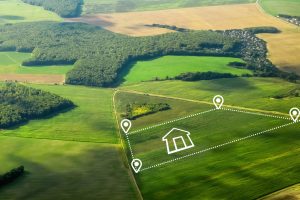
A recreational land loan is a specialized financing product designed to purchase rural property used primarily for personal enjoyment like hunting, fishing, camping, hiking, ATV riding, equestrian activities, or private family retreats, rather than for commercial farming, agricultural production, or residential development according to Capital Farm Credit.
The property may include outbuildings, sheds, ponds, timber, and improvements, but the primary use case is personal recreation, not income generation.
Recreational land loans differ from standard mortgages in three fundamental ways:
Higher down payment requirements. Because recreational land is not a primary residence, lenders cannot rely on owner-occupancy as a default risk mitigant. Most programs require 20%–35% down, compared to the 3%–20% range for residential loans.
Higher interest rates. Vacant or minimally improved land is considered a riskier asset than a home with a structure because it lacks comparable sales depth and has limited collateral value if the borrower defaults. Rates in 2026 range from 5.5%–9.0% APR depending on loan size, credit profile, and program type — typically 0.75%–2.00% above comparable conventional mortgage rates.
Specialized lenders required. Fannie Mae and Freddie Mac do not purchase recreational land loans — they fall entirely outside the GSE framework. This means recreational land buyers cannot use the same banks and mortgage brokers who handle standard home loans. Farm credit institutions, USDA programs, community banks, and specialized agricultural wholesale lenders like United Ag Lending are the primary sources.
The 2026 Recreational Land Market: Why Opportunity Is Growing
Four structural forces are expanding the recreational land financing market in 2026 in ways that create new opportunities for buyers who know where to look.
Remote work permanence. The normalization of hybrid and remote work has made weekend land ownership practical for millions of Americans who previously could not justify a long drive for a two-day escape. A family three hours from a hunting cabin now has four-day weekends available with flexible scheduling — fundamentally changing the value proposition of recreational acreage, according to AgAmerica.
Urban-to-rural equity migration. Homeowners in major metros who locked in equity during the 2020–2022 appreciation surge are using that equity as down payment capital for rural recreational acquisitions. Cash-out refinances and home equity loans on primary residences are funding recreational land purchases at record rates.
Conservation and carbon credit revenue. Recreational properties increasingly generate supplemental income through hunting leases, conservation easements, carbon credit programs, and timber management — making them hybrid investment-lifestyle assets. The USDA Conservation Reserve Program paid landowners an average of $142 per acre per year in conservation payments in 2024, adding a financial return layer to what was previously considered a pure lifestyle purchase.
Generational wealth transfer. The intergenerational transfer of rural land is accelerating as Baby Boomer landowners age, and their children — many of whom live in cities — are seeking financing tools to retain family land rather than liquidate it at estate.
Top 5 Recreational Land Loan Programs in 2026
Program 1: United Ag Lending — Agricultural Wholesale Recreational Land Loans
Best for: Buyers seeking large acreage, multiple parcels, or non-contiguous recreational holdings that conventional lenders cannot accommodate; mortgage brokers and lenders expanding their agricultural product offerings.
United Ag Lending is a full-service agricultural wholesale lender serving brokers, banks, and lenders across the United States with specialized recreational land financing that most wholesale channels simply do not offer. Their recreational land program is specifically engineered for the complexity that disqualifies buyers from conventional financing.
Recreational Land Loan Program specifications :
- Minimum loan amount: $500,000
- Minimum acreage: 10 acres; no maximum acreage limit
- Multiple parcels: Permitted — including non-contiguous parcels financed together in one loan
- Down payment: As low as 30% down (70% LTV maximum)
- Minimum credit score: 680 (one of three bureaus)
- Loan terms: Fixed-rate 10–30 years; adjustable rates also available
- Payment options: Monthly, semi-annual, or annual payment schedules
- Allowable improvements: Outbuildings, sheds, and land improvements permitted
- Seller-carried seconds: Allowed — enabling seller financing to bridge the gap on the down payment
- Cross-collateralization: Permitted for down payment purposes using other land or property owned
- Cash-out refinance: Available alongside purchase and rate-and-term refinance
- Early payoff penalty: None — no prepayment penalty on any term
- Property types served: Hunting, fishing, camping, equestrian, private retreats, timberland, orchard and vineyard parcels
United Ag Lending operates as a wholesale lender — meaning buyers access this program through a mortgage broker or lender partner rather than applying directly. For loan officers and brokers with clients seeking recreational land financing, partnering with United Ag Lending at UnitedAgLending.com opens a product line most retail banks cannot offer.
The non-contiguous parcel feature is particularly noteworthy. A buyer who wants to consolidate a 200-acre hunting tract across three separately deeded parcels in the same county — a common scenario in states where land has been divided through inheritance — can finance all three in a single United Ag Lending loan, rather than navigating three separate transactions or being declined entirely by a conventional lender unable to handle fragmented parcels.
Program 2: Farm Credit System — Cooperative Recreational Land Loans
Best for: Buyers in agricultural states seeking 30-year fixed terms with cooperative patronage dividends that reduce effective borrowing costs.
The Farm Credit System — comprising institutions including GreenStone Farm Credit, Capital Farm Credit, AgGeorgia Farm Credit, Southern AgCredit, and Texas Farm Credit — is a network of federally chartered cooperative lenders specifically designed to finance agricultural and rural real estate. Farm Credit institutions are the most broadly available recreational land lenders in the U.S. by geographic coverage.
Typical program specifications:
- Down payment: 15%–20% (85%–80% LTV) for qualified borrowers; some lenders 20%–25%
- Minimum credit score: 660–700 depending on institution
- Loan terms: Up to 30-year amortization; GreenStone explicitly offers 30-year terms with no build obligation
- Minimum acreage: Typically 5+ acres; varies by institution and state
- Rate range (2026): 5.5%–7.5% fixed for qualified borrowers
- Patronage dividends: Cooperative members receive annual patronage refunds that effectively reduce borrowing costs; First South Farm Credit has distributed patronage refunds for 28 consecutive years
- Interest rate conversions: GreenStone members can convert rates without new appraisals, credit checks, or title fees when rates drop
Farm Credit institutions are not-for-profit cooperatives — borrowers become members and share in the institution’s earnings, creating a borrowing cost advantage unavailable through commercial lenders.
Program 3: AgAmerica — Flexible Recreational Land Financing
Best for: Buyers seeking interest-only payment structures, rapid approval timelines, and access to capital for larger recreational acquisitions with revenue-generating components.
AgAmerica positions itself as a private agricultural lending alternative to the Farm Credit System, with faster approval timelines and more flexible product structures for buyers who do not qualify for traditional farm credit programs.
Program specifications:
- Minimum loan amount: $50,000
- Minimum acreage: 25+ acres (agricultural-zoned land required)
- LTV: Up to 70%–75% depending on property and borrower profile
- Interest-only options: Available for up to 10 years — maximizing cash flow for buyers also managing hunting lease or conservation revenue
- Approval timeline: As fast as 48 hours for approved applications
- Rate type: Fixed (up to 10 years) or variable
- Cash withdrawals: Unrestricted — borrowers can access equity without restrictions during the draw period on applicable products
- Rate range (2026): 6.5%–9.0% APR depending on term, LTV, and credit
AgAmerica is particularly useful for buyers whose recreational land generates income through hunting leases, timber sales, or conservation easements — allowing that revenue to factor into qualification without requiring it to be classified as commercial agricultural production (AgAmerica, 2025).
Program 4: USDA Direct Loan / Section 502 — Rural Land with Residential Intent
Best for: Lower-income buyers purchasing rural recreational land where a primary or secondary residence will be constructed, in eligible rural areas with household income limits.
USDA direct loans are not pure recreational land products — but for buyers who plan to build a cabin, hunting lodge, or second home on their recreational property, the USDA Section 502 Direct Loan program offers the most favorable terms available for eligible rural properties.
Program specifications:
- Down payment: As low as 0% for qualifying income tiers
- Credit score: No minimum required by USDA — creditworthiness assessed holistically
- Income limits: Up to $103,500 for 1-4 person households in standard areas; $136,700 for 5+ persons (USDA Rural Development, 2026)
- Rate range (2026): As low as 1%–4% APR with payment assistance for very low income borrowers; market rate (~5.5%) without assistance
- Geographic requirement: Property must be in a USDA-eligible rural area — verified at the USDA eligibility map
- Primary or secondary structure required: Must intend to occupy or use as a residence; pure bare land not eligible without building intent
For buyers who meet USDA income thresholds and plan to build, this program is unmatched on rate. Review the USDA home loan requirements guide for a complete eligibility breakdown including income limits, geographic eligibility maps, and the distinction between guaranteed and direct loan programs.
Program 5: Community Banks and Portfolio Lenders — Bare Land and Raw Acreage Loans
Best for: Buyers seeking small-to-mid-size recreational parcels (5–50 acres) in local markets where community banks have direct knowledge of land values and are willing to hold loans in portfolio.
Community banks and savings institutions remain the most accessible entry point for buyers seeking smaller recreational parcels who cannot meet the $500,000 minimum of programs like United Ag Lending or the 25-acre requirement of AgAmerica.
Typical program specifications:
- Down payment: 20%–35% (65%–80% LTV)
- Minimum credit score: 640–680 depending on institution
- Loan terms: 5–20 years; some balloon structures; 30-year terms less common
- Rate range (2026): 6.5%–9.0% APR fixed; higher for raw land with no improvements
- Acreage range: Typically 5–200 acres in local markets
- Key advantage: Local appraisers, local market knowledge, and relationship-based underwriting that allows portfolio lenders to approve properties that standardized underwriting models cannot evaluate
Community bank loan officers in rural counties who have personally appraised hunting land in their market for 20 years bring expertise that no automated valuation model replicates. For buyers in local markets where land values are well-established, this human underwriting advantage can be the difference between approval and denial.
Credit Score and LTV Requirements Comparison Table
| Program | Min. Credit Score | Max. LTV | Min. Down Payment | Min. Acreage | Min. Loan Amount | Rate Range (2026) |
|---|---|---|---|---|---|---|
| United Ag Lending | 680 | 70% | 30% | 10 acres | $500,000 | 6.5%–8.5% |
| Farm Credit System | 660–700 | 80%–85% | 15%–20% | 5 acres | ~$25,000 | 5.5%–7.5% |
| AgAmerica | Not specified | 70%–75% | 25%–30% | 25 acres | $50,000 | 6.5%–9.0% |
| USDA Section 502 | None (holistic) | 100% | 0% | N/A | N/A | 1%–5.5% |
| Community Banks | 640–680 | 65%–80% | 20%–35% | 5 acres | ~$25,000 | 6.5%–9.0% |
What Lenders Evaluate on Recreational Land Loan Applications
Understanding the underwriting lens for recreational land loans helps buyers prepare stronger applications and anticipate questions that would not arise on a standard residential mortgage.
Land access and ingress/egress. Lenders want to confirm the property has legal road access — either a deeded easement or public road frontage. Landlocked parcels without recorded access easements are very difficult to finance through any program and should be identified before making an offer.
Survey and boundary clarity. A current survey — or willingness to obtain one — is important for larger parcels. Lenders want boundary clarity, especially on non-contiguous parcels or properties with complex easement histories.
Water access and utilities. Whether the property has access to water (well, surface water, irrigation rights) affects both the appraisal value and the lender’s risk assessment. Properties with documented water rights or existing wells appraise significantly higher than dry land without water infrastructure.
Timber and mineral rights. Some lenders apply haircuts to appraised values if mineral rights have been severed and are held separately. Confirm the status of surface rights, mineral rights, and timber rights before applying.
Environmental factors. Wetlands designations, floodplain classifications, and EPA environmental reviews can affect both buildability and lender appetite. Properties in FEMA 100-year floodplains require flood insurance, increasing carrying costs.
Comparable sales depth. In rural markets with low transaction volume, appraisers may struggle to find comparable sales within 10–20 miles. Buyers should ask their real estate agent to provide comp data proactively to the appraiser rather than waiting for the appraiser to struggle with data scarcity.
For buyers comparing recreational land loans against other rural financing options, the general land loan guide provides a complete overview of raw land, improved land, and construction-to-permanent loan programs. Buyers considering recreational properties on smaller unimproved parcels should also review the vacant land loan guide for important distinctions between recreational loan programs and standard vacant land financing.
The BRRRR Strategy for Recreational Land: Buy, Improve, Refinance, Recreate, Repeat
Sophisticated recreational land buyers in 2026 are applying a version of the real estate investment BRRRR strategy to recreational property — purchasing undervalued land, adding improvements (cabin, road improvements, pond development, food plots), refinancing to extract equity at a higher appraised value, and using that capital to acquire the next parcel.
The United Ag Lending program’s cash-out refinance option and cross-collateralization feature (using equity in existing land as down payment on a new acquisition) enable this strategy in a way most recreational land buyers have never been told is possible. A buyer who owns 80 acres of hunting land with $300,000 in equity can potentially cross-collateralize that parcel as the down payment on a $500,000+ acquisition of adjacent property — expanding the recreational holding without liquidating any existing assets.
This is not a strategy discussed in standard first-time land buyer resources. It requires working with a lender who has the program flexibility — and the agricultural lending expertise — to execute it. Wholesale lenders like United Ag Lending provide that expertise specifically through the broker and lender channel.
Step-by-Step: How to Apply for a Recreational Land Loan in 2026
Step 1: Define your use case and acreage needs clearly. Lenders price and structure recreational land loans based on what you plan to do with the property. A 10-acre fishing retreat and a 500-acre hunting lease operation require entirely different programs. Know your use case before approaching a lender.
Step 2: Get your credit in order. Most recreational land programs require a minimum 660–700 credit score. Pull all three bureaus and address any derogatory marks, collections, or errors before applying. United Ag Lending’s 680 minimum from one bureau is one of the more flexible thresholds in the market.
Step 3: Identify your down payment source. Minimum down payments range from 15% to 35% depending on program. Document the source of your down payment funds — retirement accounts, home equity, savings, or cross-collateralization of existing property. If using a cash-out refinance on a primary residence to fund the down payment, initiate that process first.
Step 4: Work with a broker connected to agricultural wholesale lenders. Standard mortgage brokers working only with Fannie Mae and Freddie Mac lenders cannot help you with a recreational land loan. Find a broker who has established relationships with farm credit lenders, AgAmerica, or agricultural wholesale lenders like United Ag Lending.
Step 5: Commission a survey and order a title search early. These are almost always required and frequently become the longest lead-time items. Starting them early prevents them from being the closing bottleneck.
Step 6: Be prepared for a longer closing timeline. Recreational land loans typically close in 45–75 days from application — longer than residential loans due to appraisal complexity, survey requirements, and the specialized underwriting review. Plan your purchase timeline accordingly.
Takeaways on Recreational Land Loans in 2026
The recreational land financing market in 2026 is broader and more accessible than most buyers realize — but it requires working with the right lenders and the right programs. Farm Credit cooperatives offer the most competitive rates for buyers in agricultural states. AgAmerica provides interest-only flexibility for buyers with revenue-generating recreational assets. United Ag Lending, operating as an agricultural wholesale lender through broker and bank partnerships, offers the most flexible program structure for complex acquisitions: large acreage, non-contiguous parcels, cross-collateralization, and seller-carried seconds — all with no prepayment penalty and 30-year fixed-rate terms.
For buyers who have spent years saving for their dream hunting property, fishing retreat, or private family escape — and who have been told by a conventional bank that financing “isn’t available” for recreational land — the programs in this guide represent opportunities that have existed all along, just outside the conventional lending aisle.
RefiGuide can connect you with niche lenders and brokers specializing in recreational land and agricultural property financing at no cost and with no obligation.
Sources and References
- Realtors Land Institute. (2025). Land market trends and recreational property values 2025.
- United Ag Lending. (2026). Agricultural wholesale mortgage lender: Programs overview.
- BD Nationwide – How to Finance Raw Land, Lots, Farms in 2026 by John Tappan
- USDA Rural Development. (2026). Section 502 direct loan program.
Reviewed by: Bryan Dornan, Lending Expert (25+ years) | Fact-Checked ✓
Disclosure: RefiGuide.org is an advertising marketplace, not a licensed mortgage lender or broker. Loans are matched with participating NMLS-licensed institutions.
About Bryan Dornan
Bryan Dornan is a financial journalist and mortgage industry veteran with nearly 30 years of experience as a lender, loan officer, mortgage broker, and chief marketing officer. He currently serves as Chief Editor of RefiGuide.org, where he has built one of the most trusted mortgage education platforms in the United States. Bryan has founded multiple mortgage and digital marketing companies throughout his career and remains focused on helping homeowners leverage home equity wisely while making affordable homeownership accessible to everyday Americans. He is a licensed California Real Estate Broker DRE: #01203791. and writes for RealtyTimes, Patch, Buzzfeed, Medium and other national publications. Find him on Twitter, Muckrack, and Linkedin
More articles by Bryan Dornan