
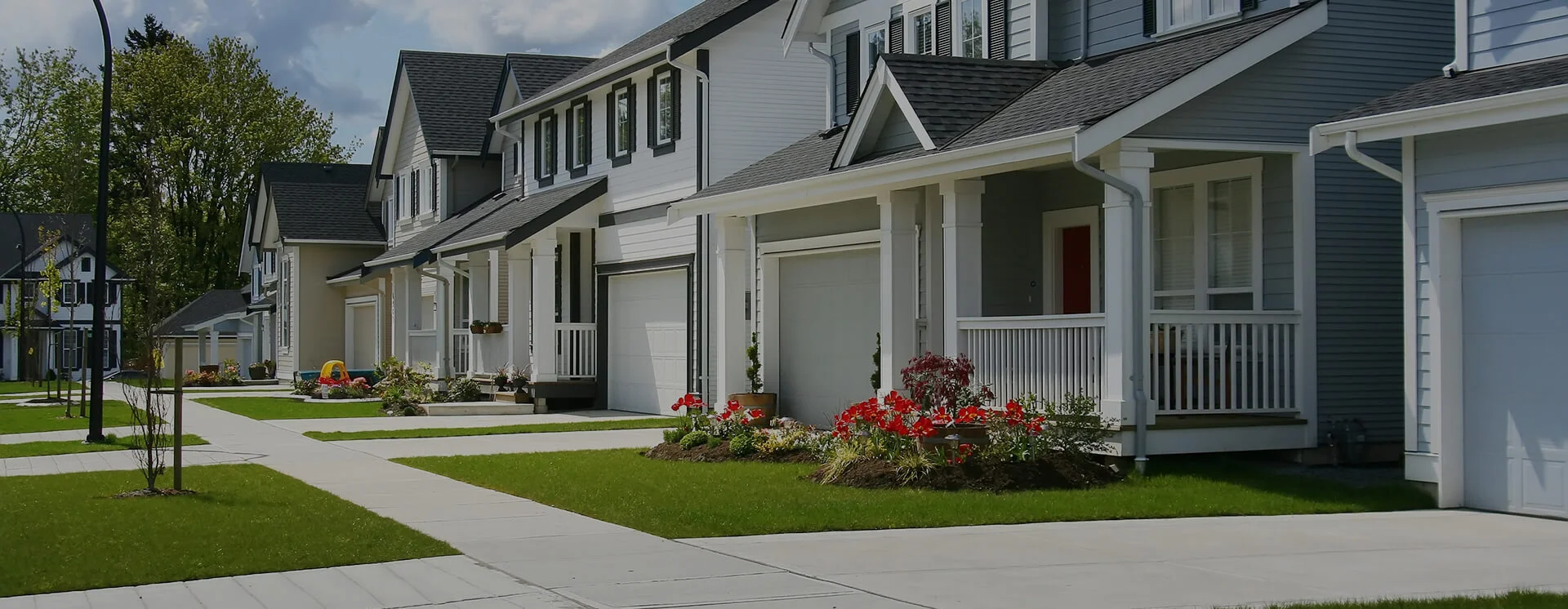


Manufactured homes provide an affordable alternative to traditional site-built houses, allowing homeowners to own property at a fraction of the cost. However, when it comes to accessing home equity through financial products like a Home Equity Line of Credit, many manufactured homeowners find themselves wondering if they qualify.
Key Points for HELOCs on Manufactured Homes
- Title status decides everything. A home still carrying a DMV vehicle title is personal property and cannot secure a HELOC — it must be retired and the home permanently affixed to land you own.
- Land-lease and park placements rarely qualify, because without owning the ground there is no real estate interest to lien.
- Homes built before June 15, 1976 are excluded by nearly every lender. Check for the red HUD certification label.
- Availability is the obstacle, not qualifying. Most national HELOC lenders exclude manufactured housing by policy, so contact the specialty lenders advertising HELOCs on manufactured homes.
- Expect an engineer’s foundation certification and an appraisal built on manufactured-home comparables, which may limit usable equity.
Getting approved for a HELOC on a manufactured home can be challenging and dependent on multiple factors, including home classification, foundation type, lender requirements, and state regulations. Since taking out a HELOC on manufactured home properties can be more challenging than obtaining one on a traditional house due to lender restrictions, property classification, and home value considerations. The RefiGuide can help you find lending companies offering the best HELOCs for manufactured houses in 2026.
Can You Get a HELOC or Home Equity Loan on a Manufactured Home?

Yes — but with important conditions. You can get a HELOC or home equity loan on a manufactured home, provided it meets four key requirements:
#1 it must have been built after June 15, 1976 (bearing a HUD certification label),
#2 be permanently affixed to a foundation with the chassis removed,
#3 be titled as real property (not personal property like a vehicle), and
#4 sit on land you own — not leased lot space.
Most traditional banks don’t offer these home equity loan products for manufactured homes, so you’ll typically need specialized lenders such as 21st Mortgage, Cascade Loans, or Nations Lending.
You should be prepared for stricter terms: minimum credit scores of 620–680, maximum 80% LTV, and higher rates than site-built homes due to depreciation risk. A personal loan is the faster alternative if your home doesn’t meet these requirements.
Getting approved for an equity loan HELOC on a manufactured home is a real possibility, the process is often more complex compared to traditional site-built homes.
When shopping for a home equity line of credit online, it is imperative that you find the lenders that actually allow HELOCs on manufactured homes, otherwise you are wasting your time.
Some common challenges include:
HELOC Lender Restrictions
Many conventional banks and credit unions do not offer HELOCs on manufactured homes due to the perceived risk associated with depreciation. Unlike site-built homes, which generally appreciate in value, manufactured homes can lose value over time, making lenders cautious about offering credit lines secured by these properties. Most home equity lenders do not offer equity loans and HELOCs on manufactured homes. The RefiGuide can connect you to the best HELOC lenders that offer second mortgages on manufactured and mobile homes.
Property Classification Issues
One of the biggest hurdles to obtaining a home equity line of credit is whether the home is classified as real or personal property. If a manufactured home is still titled as personal property (like a vehicle), lenders are unlikely to approve a HELOC or manufactured home equity loan. Homeowners may need to convert their title to real property by permanently affixing the home to land they own.
Higher HELOC Interest Rates and Stricter Terms
Even when a bank or 2nd mortgage lender does offer a HELOC on a manufactured home, borrowers often face higher interest rates and stricter terms on home equity loan products. This is due to the increased risk perceived by lenders, as well as the limited resale market for manufactured homes.
Top 6 Lenders for HELOCs on Manufactured Homes in 2026
Who Does HELOCs on Manufactured Homes?
Few lenders do. A HELOC needs real property collateral, so your home must be built after June 15, 1976, permanently affixed to land you own, and titled as real property rather than carrying a vehicle title. Even then, most national HELOC lenders exclude manufactured housing by written policy, which makes this an availability problem before it is ever a qualifying problem.
The six sources below either advertise manufactured home equity financing or list both home equity lines and manufactured home lending among their programs. Program terms and property eligibility change often, so contact lenders directly for current HELOC rates, APRs, closing costs, and written confirmation that your specific home qualifies.
| Lender or Channel | What Their Material Confirms | Coverage | What to Verify First |
|---|---|---|---|
| Nations Lending | Lists both home equity / HELOC and manufactured home lending among its loan programs, alongside portfolio and credit-challenged options. | All 50 states and DC (NMLS #32416) | That the two programs combine on a single file — a lender can offer both separately without allowing manufactured collateral on the HELOC. |
| Manufactured Nationwide (The Federal Savings Bank) |
An in-house portfolio HELOC on manufactured homes, approved by senior officer exception. States a 620 minimum credit score with no exceptions, and roughly 80% combined loan-to-value. | All 50 states (NMLS #411500) | Doublewide or larger on a permanent foundation on land you own. Singlewides, leased land and park placements are excluded. |
| Credit Human Federal Credit Union | One of the country’s largest manufactured housing lenders. Its manufactured housing division lists purchase, refinance and home equity with cash-out options. | National manufactured housing program | Whether the equity product is a revolving line of credit or a closed-end second mortgage. Their published material says home equity, not HELOC. |
| Truliant Federal Credit Union | Publishes borrower guidance on HELOCs for double-wide homes, and limits manufactured home lending to double-wides on permanent foundations. | North Carolina, South Carolina, Virginia (membership required) | That manufactured eligibility extends to the HELOC and not only to purchase mortgages, plus your membership eligibility. |
| BD Nationwide | A broker network specializing in manufactured and mobile home equity financing, matching files to portfolio lenders that accept manufactured collateral. | Nationwide broker | Which funding lender the file is placed with, and that lender’s foundation and titling requirements. (not a lender) |
| Local banks and credit unions | Portfolio HELOCs held on the balance sheet rather than sold, which is why manufactured collateral can be a case-by-case underwriting decision instead of an automatic decline. | Your local market | Ask directly whether manufactured collateral is permitted before you apply, so a decline never reaches your credit report. |
Why the List Is Short
Several large lenders draw the line at the line of credit itself rather than at manufactured housing. U.S. Bank, for example, will accept a manufactured home as collateral for a home equity loan when the home is affixed to land you own, outside a mobile home park, and de-titled so its title merges with the land — but states plainly that a manufactured home cannot be used as collateral for a home equity line of credit. State Employees’ Credit Union takes a similar position, confirming on its own HELOC page that manufactured homes cannot serve as collateral.
That distinction matters when you shop. A revolving line commits a lender to future advances against an asset class whose appreciation is harder to predict, while a one-time disbursement does not. If several HELOC applications come back declined, a fixed-rate second mortgage on the same equity is often available from the same institution, and asking for it by name saves a round of calls.
Compare lenders on fees, state availability and manufactured collateral policy. Confirm your home carries its HUD certification label, sits on a permanent foundation, and is titled as real property before you apply.
How to Improve Your Chances to Get Approved for a HELOC on a Manufactured Home
Although obtaining a home equity loan or HELOC on a manufactured home can be difficult, there are steps homeowners can take to improve their chances:
1. Ensure the Home is Classified as Real Property
If your manufactured home is still classified as personal property, work with your local county recorder’s office to convert it to real estate. This typically involves securing a permanent foundation and surrendering the mobile home title. There are not many banks offering a HELOC on a mobile home, but there are a handful offering manufactured home HELOCs.
2. Improve Your Credit Score
Lenders will look at your creditworthiness when evaluating your HELOC application. A credit score of 620 or higher is generally required, though some lenders may demand a score of 680 or above. Besides, to some degree, the higher your credit score, the lower the HELOC interest rate will be.
3. Increase Home Equity
The more equity you have in your home, the more likely a lender will approve your home equity line of credit. Lenders typically require at least 20% equity, though some may have stricter requirements.4
4. Work with Specialized HELOC Lenders
Not all banks and credit unions offer HELOCs for manufactured homes, but some specialized lenders cater to this market. Research financial institutions that have experience with manufactured home lending. There are quite a few mortgage lenders that offer programs to refinance a manufactured home, but very few companies will offer home equity lines of credit. The RefiGuide can help you find lenders offers programs for a HELOC on a manufactured home.
5. Explore Alternative Financing Options
If you struggle to get a home equity line of credit, consider alternatives such as:
- Personal Loans: Unsecured loans that do not require home equity. Many mobile home equity loans are actually personal installment loans. mobile home HELOCs are typically unsecured loans as well.
- Cash-Out Refinancing: Replacing your current mortgage with a new loan (cash out refinance) that allows you to receive money.
- Chattel Loans: Loans specifically designed for manufactured homes not affixed to real estate.
What Classifies as a Manufactured Home?
Manufactured homes, sometimes confused with mobile homes, are factory-built homes constructed after June 15, 1976, in compliance with the U.S. Department of Housing and Urban Development (HUD) standards. Unlike modular homes, which are also factory-built but meet local building codes and are assembled on-site, manufactured homes are built on a permanent steel chassis and transported to their final location. Learn more about manufactured home loan requirements.
To be eligible for a HELOC, a manufactured home must typically meet certain requirements:
- Permanent Foundation: Most lenders require the home to be affixed to a permanent foundation.
- Title Conversion: The home must be classified as real property rather than personal property.
- HUD Compliance: The home must comply with HUD’s Manufactured Home Construction and Safety Standards.
- Age of the Home: Many lenders require the home to be built after a certain year, often within the last 20 to 30 years.
The Future of the Home Equity Line of Credit on Manufactured Homes
As the demand for affordable housing grows, lenders may become more open to offering HELOCs on manufactured homes. With advancements in manufactured home construction and increasing property values in some regions, these homes may gain greater acceptance in the lending market. However, until broader changes occur, homeowners seeking a home equity loan or HELOC must be diligent in meeting lender requirements and exploring alternative financing solutions.
FAQs on HELOCs and Manufactured Homes
Can I Get a HELOC on a Manufactured Home with Low Credit Scores?
Yes, a HELOC on a manufactured home is possible with credit scores as low as 620, though lenders prefer 680+. Low scores may require higher equity (20–40%) and land ownership. Some lenders consider alternative data for approval. The RefiGuide will connect you with lenders that offer bad credit HELOC on manufactured homes if you have enough equity. Expect higher rates (9–12%) and stricter terms. Improve chances with a co-signer or debt reduction.
How do I apply for a HELOC or equity loan for my manufactured home?
To apply for a HELOC or home equity loan on a manufactured house, you’ll need to confirm that your property is permanently affixed to land you own and meets lender guidelines. Most lenders require a solid foundation, HUD certification, and adequate equity. You’ll typically provide proof of income, credit history, and home appraisal. Start by contacting banks, credit unions, or specialty lenders experienced with manufactured housing to explore HELOC eligibility and competitive terms.
Can I get a HELOC on a modular home with good credit?
Yes, many lenders offer HELOCs on modular homes, especially if you have good credit and sufficient equity. Modular homes are treated similarly to traditional stick-built houses because they are built to state building codes and placed on permanent foundations. With strong credit, stable income, and favorable loan-to-value ratios, you may qualify for competitive rates and terms. Always confirm with individual lenders, as some have specific requirements for property type and appraisal.
Who does home equity loans on manufactured homes?
Home equity loans on manufactured homes are available, but only through lenders that specialize in manufactured or mobile home financing. Many traditional banks offer manufactured home equity loans only if the house is permanently affixed to a foundation, titled as real property, and built after June 15, 1976. Specialized lenders like Nations Lending, credit unions, and some regional banks provide more flexible programs for manufactured homes that meet HUD standards. Borrowers should compare lenders carefully, as guidelines, appraisal requirements, and loan limits can vary widely.
Are there lenders offering HELOCs on mobile homes in 2026?
Yes, but options are more limited. In 2026, some banks, credit unions, and specialty lenders continue offering personal loans HELOCs on mobile homes, provided the home is permanently affixed to land you own and meets HUD or state guidelines. Credit score, equity position, and property condition play major roles in approval. Because mobile home financing is more specialized, it’s best to seek lenders that specifically advertise HELOC programs for manufactured and mobile housing. Most mobile home owners are choosing personal loans because they offer cash like a HELOC but they do not require the home to fixed to the ground like manufactured housing.
Are there VA lenders for manufactured home HELOC loans?
VA lenders typically do not offer HELOCs directly on manufactured homes. The VA program focuses on purchase loans, cash-out refinances, and streamline refinances (IRRRLs) for eligible veterans. However, some lenders may structure second-lien products, including HELOCs, for veterans with manufactured homes that meet permanent foundation and title requirements. Availability is limited, so veterans often explore conventional or non-QM HELOC lenders alongside VA-backed mortgage solutions for manufactured housing.
Do Lenders Treat Single-Wide and Double-Wide Manufactured Homes Differently for Equity Loans?
Yes — single-wide vs. double-wide classification significantly affects approval odds. Most lenders offering home equity loans on manufactured homes require the property to be a double-wide or larger, citing better structural stability, higher appraised values, and lower depreciation risk compared to single-wides. Lenders like 21st Mortgage, Triad Financial, and Cascade Loans specifically state double-wide requirements in their guidelines. A few specialty lenders offer programs for single-wides, but expect stricter credit minimums (680+), lower maximum LTV ratios (often 65%–70%), and higher interest rates. Borrowers with single-wide homes may find a personal loan or cash-out refinance more accessible than a HELOC.
How Do You Convert a Manufactured Home From Personal Property to Real Property to Qualify for a Home Equity Loan?
Converting a manufactured home from personal property (titled like a vehicle) to real property (titled like a house) is the most critical step to qualifying for a HELOC or home equity loan. The process typically involves: owning the land the home sits on, permanently affixing the home to a foundation meeting HUD or FHA standards, removing the wheels, axles, and towing hitch, filing an affidavit of affixture with your county recorder, and surrendering the vehicle title to your state’s motor vehicle department. Requirements vary by state, so work with a title company experienced in manufactured housing to ensure proper documentation.
Is a Cash-Out Refinance a Better Alternative to a HELOC on a Manufactured Home?
For many manufactured homeowners, a cash-out refinance is often more accessible than a HELOC — more lenders offer it, and it typically carries lower rates than a second-lien home equity product. Specialized lenders including Manufactured Nationwide (80% FHA, 90% VA), Credit Human ($75,000 cash-out for land-home loans), and 21st Mortgage offer cash-out refinancing on qualified manufactured homes. The trade-off: a cash-out refi replaces your existing first mortgage at today’s rates, which may be higher than your current rate. A HELOC preserves your first mortgage untouched, but is harder to find and carries higher second-lien interest rates.
How Much Can You Borrow With a Home Equity Loan on a Manufactured Home?
The maximum borrowing amount on a manufactured home equity loan is determined by your home’s appraised value, outstanding mortgage balance, and lender’s LTV cap — typically 80%. Example: if your manufactured home appraises at $200,000 and you owe $120,000, an 80% LTV allows a maximum new loan of $160,000 — leaving you up to $40,000 available through a home equity loan. Some specialized lenders cap manufactured home equity products at lower amounts: Truliant FCU limits HELOCs to $150,000, and Credit Human caps cash-out at $75,000 for land-home loans. Your actual limit depends on equity, credit score, and the lender’s specific program guidelines.
What Are the Appraisal Requirements for a Home Equity Loan on a Manufactured Home?
Manufactured home equity loans and HELOCs always require a full in-person appraisal — unlike some site-built home products that may qualify for automated valuation models (AVMs) or appraisal waivers. The appraiser physically inspects the home inside and out, assesses the foundation condition, verifies the HUD certification label, confirms land ownership, and reviews comparable manufactured home sales. This full appraisal typically costs $500–$1,000 — significantly more than the $300–$600 for a standard site-built home appraisal — reflecting the additional complexity of manufactured home valuation. Factor this cost into your total borrowing decision when comparing a home equity loan against a personal loan alternative.
HELOC Eligibility by Home Type
| Home Type | Eligibility Factors | Pros | Cons |
|---|---|---|---|
| Manufactured Home | Must be on permanent foundation, titled as real property, HUD-certified, and on owned land | • Wider lender acceptance • Can access equity like traditional homes |
• Limited lender options • Strict appraisal and HUD compliance |
| Modular Home | Built to state building codes, placed on permanent foundation, treated like stick-built homes | • Easiest to qualify for HELOC • Competitive rates with good credit |
• Must meet local building/zoning codes</span> |
| Mobile Home | Must be affixed to owned land, meet HUD or state standards, and not classified as personal property | • Some lenders and credit unions offer HELOCs | • Most limited financing options • Stricter underwriting, higher rates |
Takeaways on Manufactured Home HELOCs
Can you get a home equity line of credit on a manufactured home? As we revealed previously, the answer is yes, but it requires navigating bank and lender restrictions, ensuring property classification as real estate, and maintaining strong creditworthiness. While challenges exist homeowners who take proactive steps can improve their chances of securing this valuable financial tool. As the market for manufactured homes evolves, the availability of home equity lines of credit may expand, offering more opportunities for homeowners to access their home equity.
Reviewed by: Bryan Dornan, Mortgage Lending Expert | Fact-Checked ✓
References
- Consumer Financial Protection Bureau. (2022). Manufactured housing finance: New insights from the Home Mortgage Disclosure Act data.
- U.S. Department of Housing and Urban Development. (2021). HUD and Manufactured homes.
About Bryan Dornan
Bryan Dornan is a financial journalist and mortgage industry veteran with nearly 30 years of experience as a lender, loan officer, mortgage broker, and chief marketing officer. He currently serves as Chief Editor of RefiGuide.org, where he has built one of the most trusted mortgage education platforms in the United States. Bryan has founded multiple mortgage and digital marketing companies throughout his career and remains focused on helping homeowners leverage home equity wisely while making affordable homeownership accessible to everyday Americans. He is a licensed California Real Estate Broker DRE: #01203791. and writes for RealtyTimes, Patch, Buzzfeed, Medium and other national publications. Find him on Twitter, Muckrack, and Linkedin
More articles by Bryan Dornan